
General & About Us.
“After 8 years in the home services industry, I've heard every question and seen every way companies dodge them. Here are honest answers.”


-
We're an independent home services consultancy based in Phoenix. We work with homeowners considering solar, roofing, HVAC or battery storage and we help them navigate the process without the pressure, confusion, or bait-and-switch tactics that are common in these industries.
We maintain a vetted network of local contractors across each trade. After a free assessment of your home and needs, we match you with the right contractor, help you understand the proposal, and stay involved through installation.
Think of us as your advocate. We work for you, not the contractor.
-
Great question — and one we believe every homeowner should ask any consultant. We earn a referral fee from the contractors in our network when a project is completed.
In fact, because we bring contractors consistent, qualified leads, they often give our clients better pricing than they'd find going direct or through a random lead service. Our incentive is to match you with the right contractor — because our reputation depends on your satisfaction.
-
Our founder, Nathan Starnes, spent 8 years in the home energy and services consulting industry — and saw firsthand how many bad-faith actors operate. High-pressure door-to-door tactics, misleading savings projections, contractors who disappear after installation, and commission structures that incentivize closing deals over finding the right solution.
Honest Energy Consulting was built as the antidote. A consultancy where the homeowner's long-term outcome — not the commission — drives every recommendation.
"I started this because I got tired of watching homeowners get taken advantage of. This industry needed someone to do it right."
-
No — and that's intentional. We are an independent consulting firm, not an installation company. We don't employ roofers, solar installers, or HVAC technicians. This independence is what allows us to recommend objectively and without bias toward any particular contractor or product line.
All physical work is performed by our vetted contractor partners, who are licensed, insured, and background-checked in Arizona.
-
We currently serve the greater Phoenix Metro area, including Phoenix, Tempe, Scottsdale, Mesa, Gilbert, Chandler, Peoria, Glendale, and Surprise. If you're in the Valley and unsure whether we cover your area, just reach out — we're growing our contractor network regularly.
-
Absolutely none. Our assessments are free, no-obligation conversations. We'll look at your home, your utility bills, and your goals — and give you honest feedback on whether solar, roofing, HVAC upgrades, or any combination actually makes financial sense for your situation.
If it doesn't make sense for you right now, we'll tell you that too. We'd rather lose a referral fee than steer you wrong.
Solar FAQ
-
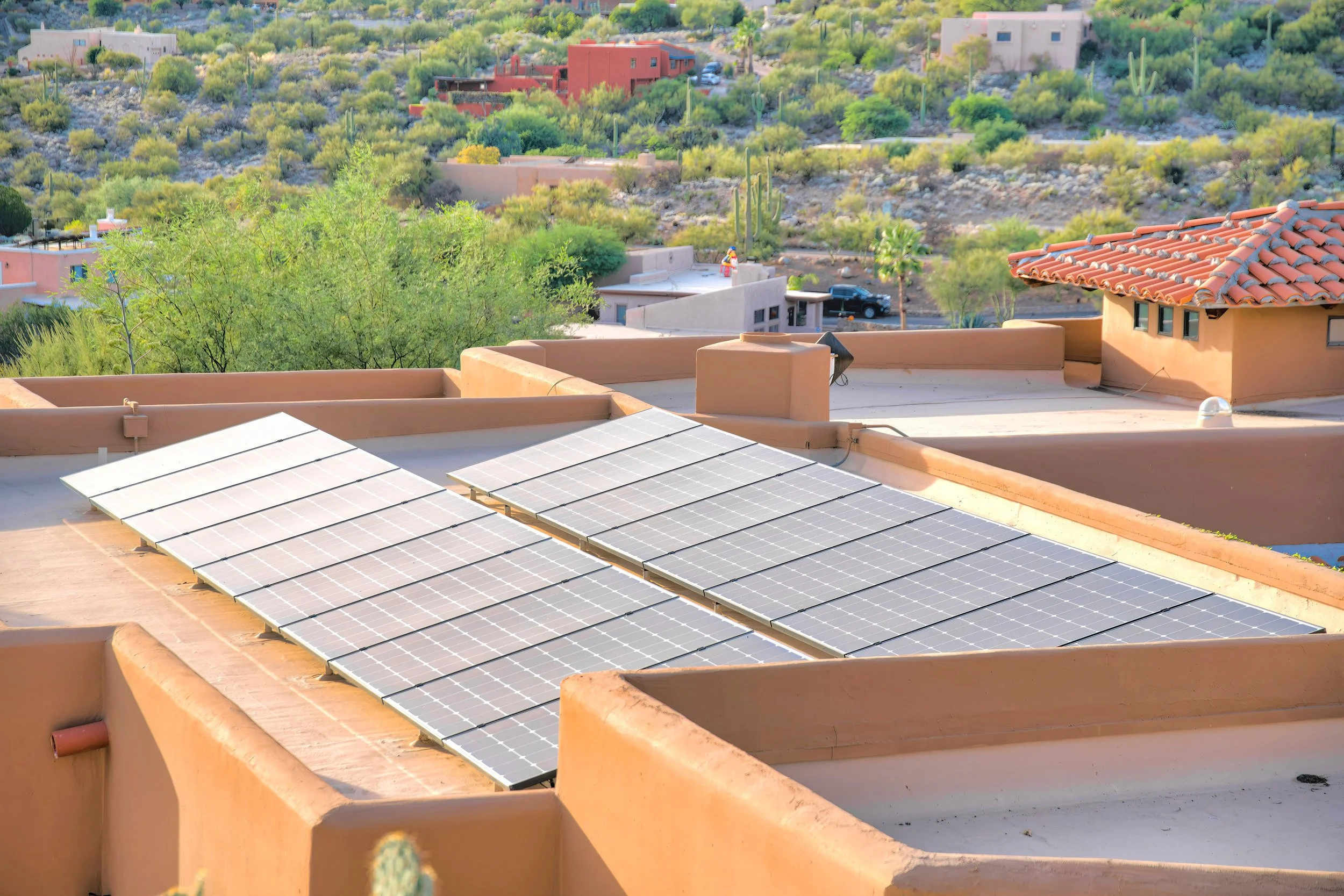
For most Phoenix homeowners — yes, and often significantly so. Arizona has some of the highest solar irradiance in the country, and APS and SRP rates have climbed considerably in recent years. A properly sized system can eliminate 80–100% of your monthly utility bill.
That said, it depends on your roof condition, energy usage patterns, how long you plan on staying in the home, and financing structure (purchase via cash or loan, , pre-paid PPA or lease option). We run the real numbers for your specific situation before making any recommendation.
Phoenix averages 299 sunny days per year — making it one of the best solar markets in the United States.
-
This is one of the most overlooked questions in the solar sales process — and one we always address first. Key factors include your roof's age, material, pitch, and structural condition. In many cases, if your roof is more than 20 years old or shows visible signs of ware, it makes sense to address it before installing solar so you're not paying to remove and reinstall panels later (solar panels have a 25-year warranty, so it’s recommended to have at least that many years remaining on your roof).
Our assessment includes a roof evaluation specifically for solar readiness. We partner with both solar installers and roofing contractors so we can coordinate a bundled approach when needed — often at better pricing.
-
There are four main options: cash purchase (fastest return on investment), solar loan (second fastest ROI), Prepaid Solar Power Purchase Agreement (Prepaid PPA), or a solar lease, which functions essentially as a “solar subscription” or rental agreement , allowing the homeowner to purchase the energy from the solar system over a 20-year period at a lower rate than their utility provider, without having to own the solar equipment.
With the exception of the aforementioned solar lease, each option has different implications for ownership, tax credits, and long-term savings. The right choice depends on your tax situation, credit, and how long you plan to stay in the home.
As of 2026, cash and loan purchases for traditional residential solar are no longer eligible for the federal 30% Investment Tax Credit (ITC).
Now only the 30% Commercial solar ITC remains, however options like the Propel Prepaid PPA lease option qualify for the 30%+ federal tax credit (Section 48/48E) and passes the savings to the homeowner through lower, fixed monthly payments and an eventual transfer of ownership at year five.
No matter what option you opt for, we will explain them clearly before you sign an agreement with anyone.
-
Many homeowners are concerned because the standard residential solar tax credit (Section 25D) has expired. Our program uses a Prepaid Power Purchase Agreement (PPA) model to ensure you still receive the full benefit of solar incentives through the Commercial Investment Tax Credit (Section 48).
Here is a breakdown of how that benefit is passed directly to you:
1. Third-Party "Incentive Capture"
Under a Prepaid PPA such as Propel, they are the commercial financing partner technically owning the solar and battery system for the first five years. Because they are a business entity, they are eligible to claim the 30% (or more) Federal Commercial ITC.
2. Immediate Price Reduction
Instead of you waiting until tax season to claim a credit—and hoping you have enough tax liability to use it—the financing partner claims the credit themselves. They then apply the full value of that credit upfront to reduce the total cost of your solar system.
The "Double Stack" Benefit: In addition to the 30% Federal Investment Tax Credit (ITC), the financing partner can write off the cost of the equipment as it "depreciates" over time.
Accelerated Savings: Normally, assets depreciate over decades. MACRS allows solar equipment to be written off over just 5 years. "Bonus" depreciation allows them to take a massive chunk (currently 20% in 2026) of that write-off in the very first year.
Calculating the Depreciable Basis: Per IRS rules, when the partner claims the 30% ITC, they must reduce the system's "depreciable basis" by half the value of that credit (15%). This leaves 85% of the total system cost available for them to write off.
The "Pass-Down" Effect: This depreciation can recoup another 10%–20% of the system's total cost for the financier. They factor these estimated tax savings into their business model, which allows them to offer you a lower upfront prepayment amount—typically about 30% less than if you bought the system in cash.
3. Lower Monthly Payments
Because the 30% savings is applied before your loan begins, you are only financing the "net cost" of the system. This results in:
Lower monthly payments compared to a standard solar loan.
No "balloon payments" or requirements to pay back a tax credit check to the lender within 18 months.
Guaranteed savings, regardless of your personal tax bracket or tax liability.
4. Path to Full Ownership
Even though the commercial partner claims the credit, they do not keep the system forever. After the 5-year federal "recapture period" ends, ownership of the system automatically transfers to you. You get the long-term benefit of owning your power, while the financing partner handles the complex tax paperwork and provides the upfront discount.
In short: The financing partner uses their commercial status to "unlock" the 30% discount, then passes every penny of that savings to you through a lower contract price.
-
The physical installation typically takes 1–2 days. However, the full process from signed contract to system activation — including design, permitting, utility interconnection approval, and inspection — typically takes 6–12 weeks in the Phoenix market.
Any solar company promising faster activation without explaining the permitting process is either cutting corners or setting unrealistic expectations. Our contractors manage this process transparently and keep you updated at every step.
-
If you own the system outright or have a loan, it typically transfers with the home as an asset — and studies show solar homes sell for a premium and faster than comparable non-solar homes in Arizona.
Leases and PPAs are more complicated. If you have a prepaid PPA through a provider like Propel, you will own the system after 5 years — if you sell it before then, the buyer must qualify to assume your agreement, which can complicate or slow a sale. Same goes for the traditional lease of course, and this is another reason we walk you carefully through financing structure before you commit.
-
Installing battery storage at the same time as solar is generally more cost-effective than adding it later — the electrical work overlaps and installation costs are lower. Whether it makes financial sense depends on your utility's rate structure and whether you experience frequent outages.
For APS customers on time-of-use rates, battery storage can provide meaningful additional savings by letting you use stored energy during peak pricing hours.
For SRP customers, the math is different, a 60% energy offset is widely considered the "sweet spot" for solar-only systems without batteries. This strategy is designed to balance the high upfront cost of solar against SRP’s specific rate structures, which significantly limit the value of excess energy sent back to the grid.
How the 60% Offset Strategy Works
Targeting Daytime Loads: A 60% offset system is sized primarily to cover your home's immediate energy needs while the sun is shining—specifically large appliances and air conditioning.
Minimizing Wasteful Exports: In SRP territory, excess solar energy sent back to the grid is credited at a very low rate (approximately 2.8¢/kWh as of 2026). By sizing the system to only 60% of your total annual use, you ensure most of the power produced is used immediately by your home rather than being "sold" to SRP at a loss.
Cost Efficiency: Without a battery to store power for the evening, any energy your panels produce beyond your immediate daytime needs provides very little ROI.
Who Is This For?
Standard Users: Ideal for homeowners who want to lower their bills without the $10,000+ added cost of batteries.
Daytime Energy Users: Best for those who are home during the day or can automate high-energy tasks to occur between 9 a.m. and 3 p.m..
Alternative Options: If you cannot install panels but want a 50-100% solar offset, SRP Solar Choice allows you to pay a small premium to support utility-scale solar without any equipment at home.
Roofing FAQ
-
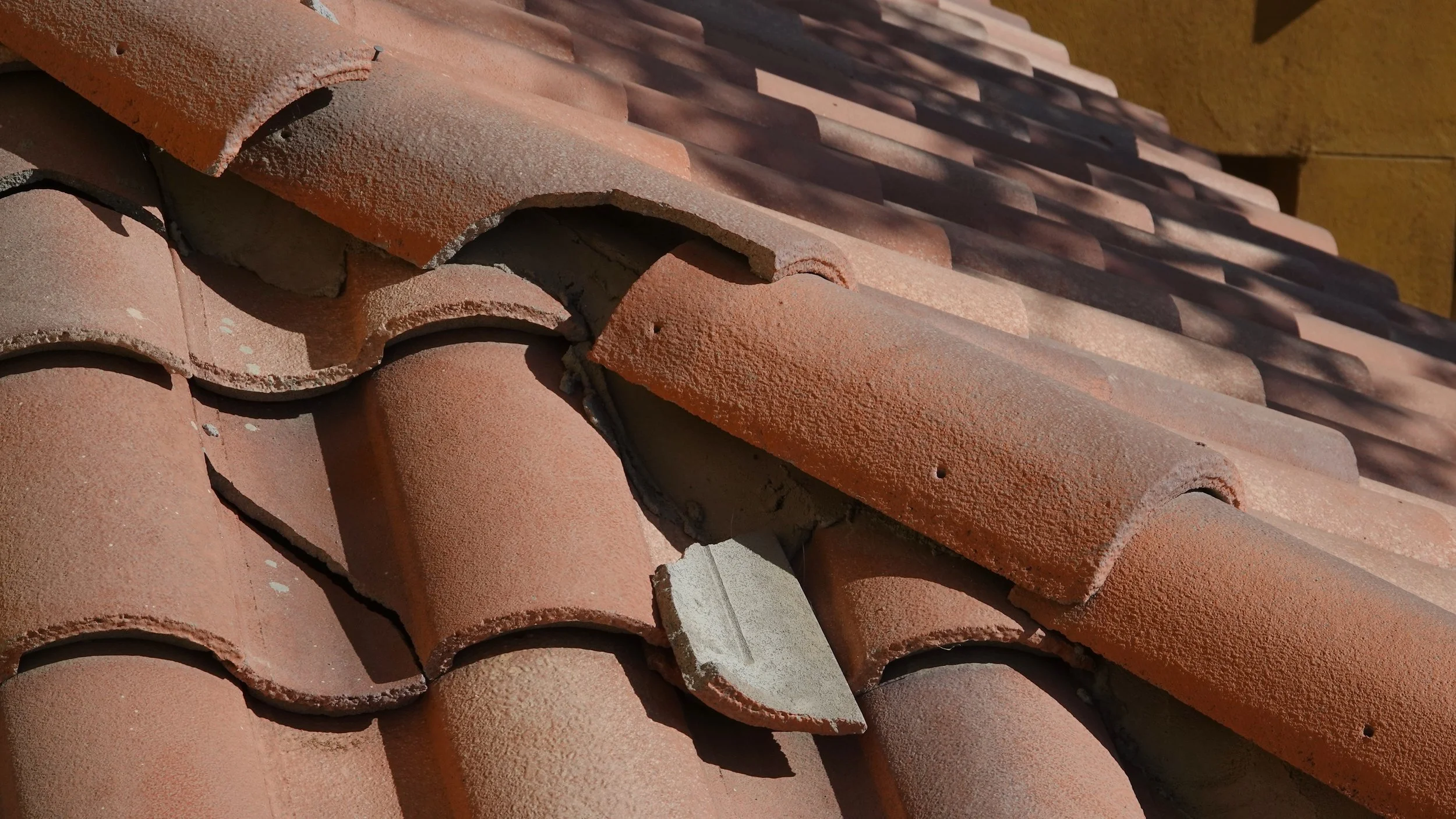
In Arizona, tile roofs typically last 25–50 years; shingle roofs 15–25 years. Signs you may need replacement include cracked or missing tiles, granule loss on shingles, visible sagging, persistent leaks after repairs, or a roof that's approaching the end of its expected lifespan.
We provide an honest assessment — not a sales pitch. If your roof has another 10 years of life in it, we'll tell you. If it needs attention before solar or monsoon season, we'll tell you that too and connect you with a vetted roofer at a fair price.
Be cautious of any contractor who says you need a full replacement after a brief visual inspection from the ground, especially after a storm.
-
After major monsoons or hail events, Phoenix sees an influx of out-of-state "storm chaser" roofing companies. Red flags include: knocking on your door unsolicited immediately after a storm, asking you to sign an assignment of benefits right away, offering to "waive your deductible," or having no verifiable local presence.
All contractors in our network are Arizona-licensed, locally established, and have verifiable track records. Before signing anything with any contractor — ours or anyone else's — verify their ROC (Registrar of Contractors) license at azroc.gov.
-
We can help you understand the process and connect you with contractors experienced in insurance work. Our roofing partners are familiar with Arizona insurance claims and can help document damage appropriately for your adjuster.
We do not act as a public adjuster — that's a licensed role we leave to professionals. But we can help you navigate the contractor side of a claim so you're not taken advantage of during a stressful process.
-
Concrete or clay tile is the gold standard in Arizona — it handles extreme heat, UV exposure, and monsoon wind better than any other material and can last 40–50+ years with proper maintenance. It's also the most compatible with solar installation.
Asphalt shingles are more affordable but degrade faster in intense heat and UV — typically 15–20 years in Arizona versus 25–30 years in cooler climates. If you're considering solar within the next decade, we generally recommend addressing shingle roofs first.
-
Yes — and this is often the smartest financial move available to homeowners who need both. By coordinating your roofing and solar projects through our network, we can align the work to reduce total cost and your solar system will be installed and penetrations sealed by your roofer.
HVAC FAQ
-
In Arizona, HVAC accounts for 50–70% of your home's energy consumption in summer. If your air conditioning system is inefficient, you may be sizing a solar system to power an energy hog — which means paying for more panels than necessary.
Upgrading to a high-efficiency system before or alongside solar can reduce the system size you need, lower your total project cost, and deliver better long-term savings. We look at the whole picture, not just one piece at a time.
-
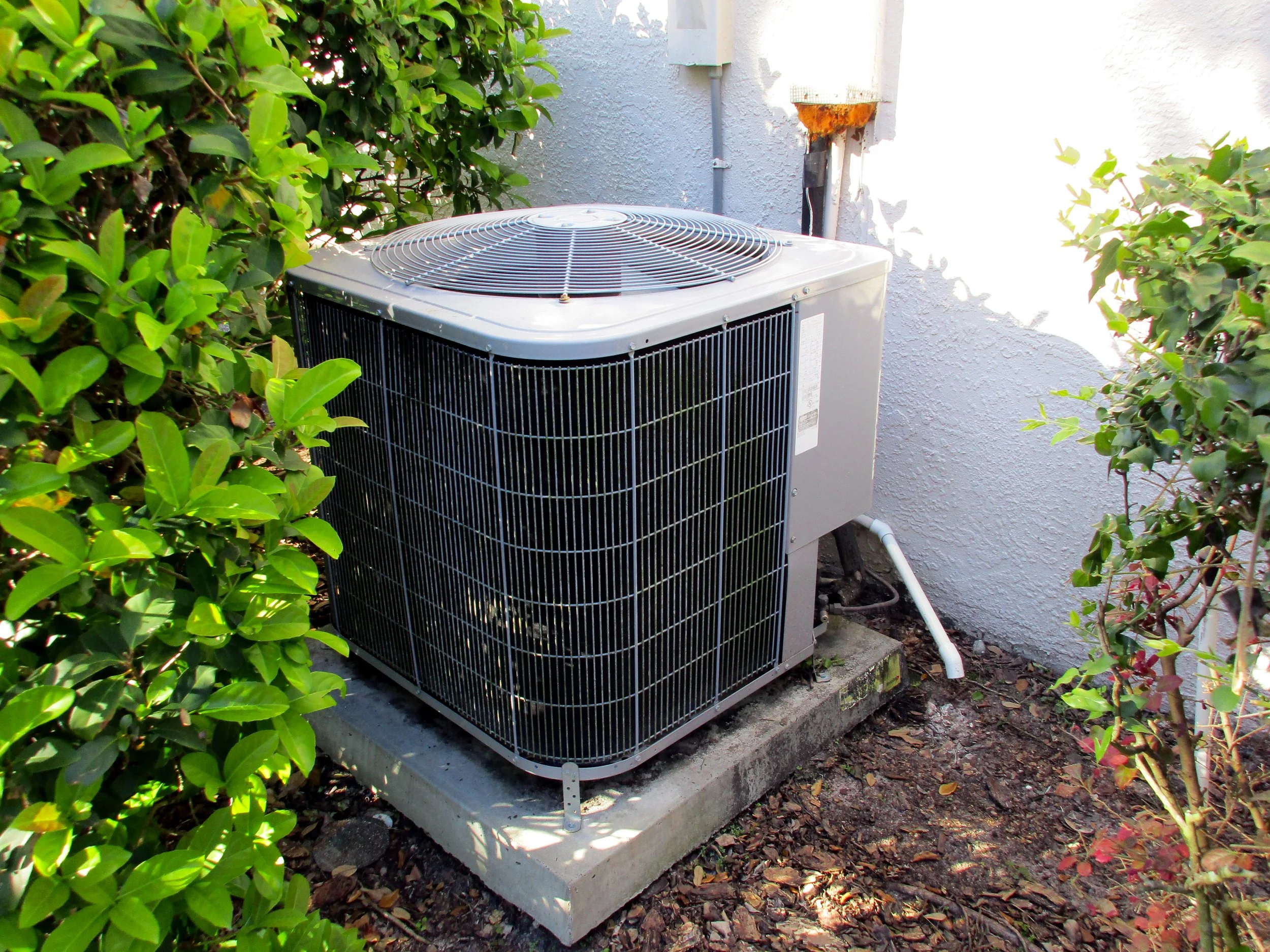
HVAC systems in Arizona typically last 12–15 years due to the extreme heat load — shorter than the national average of 15–20 years. Signs it's time to consider replacement include: the unit is 10+ years old, repair bills are adding up, your home struggles to cool below 78°F on hot days, or your energy bills have noticeably increased without explanation.
The general rule of thumb: if a repair costs more than 50% of a new unit's value and the system is over 10 years old, replacement is usually the smarter investment.
-
Yes — both APS and SRP offer energy efficiency rebates for qualifying HVAC upgrades, and the federal Inflation Reduction Act (IRA) includes tax credits of up to $2,000 for high-efficiency heat pump systems. Availability and amounts change, so we always check current programs as part of our assessment.
Stacking utility rebates with federal tax credits can significantly reduce the out-of-pocket cost of a new system. Our contractors are experienced in helping homeowners take advantage of these programs.
-
Our focus is consulting on larger decisions — replacement, upgrades, and efficiency improvements — rather than routine maintenance scheduling. However, our vetted HVAC contractors do offer maintenance plans, and we're happy to connect you with a trusted local provider for annual tune-ups and service agreements.
Having a reliable maintenance relationship with a vetted contractor means fewer emergency calls at 10pm on a 115°F August night — which is something every Phoenix homeowner should think about before summer.
FAQ ABOUT THE HONEST ENERGY NETWORK
Still have questions? Take a look at the FAQ or reach out anytime. If you’re feeling ready, go ahead and apply.
-
Every contractor in our network goes through a multi-step vetting process before we refer a single homeowner to them. This includes:
License verification through the Arizona Registrar of Contractors (ROC) · Insurance verification (general liability and workers' compensation) · Background review of the company's complaint and disciplinary history · Customer review audit across Google, BBB, and industry platforms · Personal reference checks and in some cases site visits to completed projects.
If we wouldn't send them to our own family's home, they don't make the network.
-
This is where we're fundamentally different from a lead generation service. We stay involved after the referral. If you experience a problem with a contractor's work — whether it's a warranty claim, a service issue, or a billing dispute — we advocate on your behalf.
Contractors in our network know that their continued access to our referrals depends on how they treat our clients after the sale. That accountability creates a service dynamic that's very different from what you'd get finding a contractor on your own.
-
We maintain multiple vetted contractors in each trade category. Depending on your project, location, timeline, and budget, we may present you with 1–3 options along with honest context about each one — their strengths, their pricing approach, and what past clients have said.
You always make the final call. We give you the information to make a genuinely informed decision, not just a choice between whoever we happen to have a better referral deal with.
-
We're always looking for quality contractors who share our commitment to transparent pricing and exceptional post-installation service. The vetting process is thorough — we take our homeowner relationships seriously and every contractor referral reflects on us directly.
If you're an Arizona-licensed contractor in solar, roofing, HVAC, or related home services with a track record of quality work and strong customer reviews, reach out through our contact page. We'll schedule a conversation and walk you through the partnership structure.
We prioritize quality over volume. We'd rather have five exceptional contractors than twenty mediocre ones.
-
You can reach us via our contact page, email at info@honestenergyconsulting.com.
We aim to respond quickly—usually within one business day.